
 FR
FR  EN
EN Single Blog
Table of Contents If you’ve applied for a Canadian work permit or study permit from...
Port of Entry Letter: What It Means in Canada
juillet 28, 2026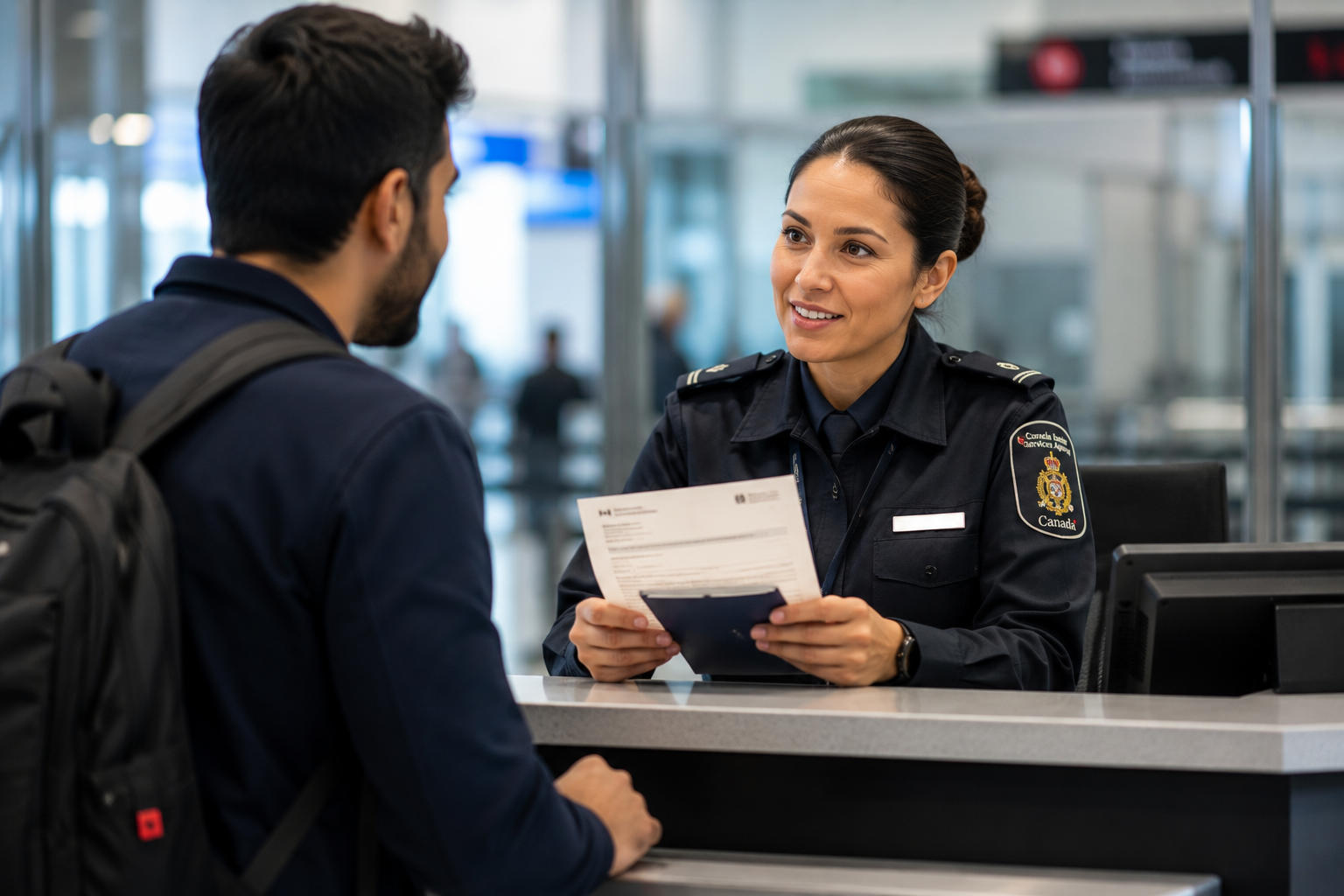
Table of Contents
If you’ve applied for a Canadian work permit or study permit from outside Canada, you may receive a Port of Entry Letter after your application is approved. While many applicants assume this document is their permit, that isn’t the case.
A Port of Entry Letter is an official notice from Immigration, Refugees and Citizenship Canada (IRCC) confirming that your temporary residence application has been approved. It allows you to travel to Canada and present yourself to a Canada Border Services Agency (CBSA) officer, who will decide whether to issue your work or study permit when you arrive.
Understanding how a Port of Entry Letter works, when it is issued, and what you need to do before travelling can help you avoid unnecessary delays at the border. This guide explains everything you need to know before beginning your journey to Canada.
What Is a Port of Entry Letter?
A Port of Entry Letter, also known as a Letter of Introduction or POE Letter, is issued by IRCC after approving certain temporary residence applications submitted from outside Canada.
The document confirms that you have met the eligibility requirements for your immigration program and may travel to Canada to complete the final stage of the process.
When you arrive at a Canadian airport or land border crossing, you must present this approval letter to a CBSA officer. The officer will review your documents, verify that you still meet the program requirements, and, if everything is in order, issue your work permit or study permit.
It is important to remember that a Port of Entry Letter is not a visa and is not your actual permit. Instead, it confirms that IRCC has approved your application and authorizes you to complete the final immigration formalities upon arrival.
Who Receives a Port of Entry Letter?
Not everyone entering Canada receives this document.
A Port of Entry Letter is commonly issued to applicants who have been approved for:
- Employer-specific work permits
- Open work permits
- Study permits submitted from outside Canada
- Certain temporary residence programs
- Some International Experience Canada (IEC) programs
Applicants already living in Canada often receive different instructions depending on the type of application they submitted and their current immigration status.
When Is a Port of Entry Letter Issued?
IRCC issues a Port of Entry Letter only after completing its assessment of your application.
Before approval, immigration officers normally review several factors, including:
- Your eligibility for the program
- Supporting visa documents
- Identity verification
- Background and security checks
- Financial requirements, where applicable
- Immigration medical exam results, if required
Earlier in the process, applicants generally receive an acknowledgment of receipt confirming that IRCC has successfully received their application.
Once every required assessment has been completed successfully, IRCC sends the approval letter through your online account together with any additional travel instructions.
What Information Does a Port of Entry Letter Include?
Although the exact format can vary depending on the immigration program, a Port of Entry Letter typically contains:
- Your full name
- Application number
- Unique Client Identifier (UCI)
- Immigration program details
- Date of issue
- Validity period
- Instructions for travelling to Canada
- Any conditions or additional requirements
Before travelling, carefully review every detail to ensure it matches your passport and application.
If you notice any errors, contact IRCC as soon as possible so they can be corrected before your departure.
Is a Port of Entry Letter the Same as a Visa?
No.
A Port of Entry Letter serves a different purpose from both a visa and a permit.
The letter confirms that your immigration application has been approved and that you may travel to Canada to complete the final admission process.
Depending on your nationality, you may also need either:
- a Temporary Resident Visa (TRV), or
- an Electronic Travel Authorization (eTA).
These travel documents allow you to board your flight, while the approval letter confirms to border officials that IRCC has already approved your application.
Is a Port of Entry Letter the Same as a Confirmation of Permanent Residence?
A Port of Entry Letter is not the same as a Confirmation of Permanent Residence. Although both documents are issued by Immigration, Refugees and Citizenship Canada (IRCC), they serve different purposes. A Port of Entry Letter is generally issued to temporary residents, such as approved work permit or study permit applicants. It is presented to a border services officer when entering Canada and allows the officer to issue the appropriate permit. However, it does not grant permanent resident status. By contrast, this document is issued after a permanent residence application has been approved, confirms the applicant is eligible to become a permanent resident, and is used to complete the landing process. Understanding the difference between these documents helps ensure you travel with the correct paperwork and know what to expect when you arrive in Canada.
Can You Travel Without Your Approval Letter?
Travelling without your approval letter can create unnecessary complications.
Border officers expect you to present this document together with your passport and any additional immigration documents requested by IRCC.
Without it, officers may not be able to verify your approval or issue your permit immediately.
For this reason, you should always carry both printed and electronic copies when travelling to Canada.
What Documents Should You Bring?
Before leaving for Canada, make sure you have every document requested by IRCC.
This usually includes:
- Passport
- Port of Entry Letter
- Temporary Resident Visa or eTA, if required
- Supporting visa documents
- Financial evidence where applicable
- Educational or employment documents
- Any additional documents listed in your approval notice
Being organised before you travel can help make the inspection process much smoother.
What Happens at the Port of Entry?
Once you arrive in Canada, a Canada Border Services Agency (CBSA) officer will review your documents before deciding whether to issue your permit.
During the inspection, the officer may:
- Verify your identity using your passport.
- Review your Port of Entry Letter and supporting documents.
- Confirm the purpose of your visit.
- Ensure you still meet the requirements of your approved immigration program.
- Ask questions about your studies, employment, or intended place of residence.
- Check any additional documentation requested by IRCC.
This inspection is a routine part of the immigration process. Answer the officer’s questions honestly and provide any requested documents promptly. If everything is satisfactory, your work permit or study permit is generally issued during your arrival.
Will You Receive Your Permit Immediately?
In most cases, yes.
Applicants who arrive with a valid Port of Entry Letter and continue to meet all program requirements usually receive their work permit or study permit before leaving the immigration inspection area.
Before you leave the CBSA counter, carefully examine the permit to confirm that:
- Your name and personal details are correct.
- The expiry date matches your approval.
- Your employer’s details are accurate if you hold an employer-specific work permit.
- Any conditions attached to your permit are correct.
If you notice an error, ask the border officer to correct it immediately. Fixing mistakes before leaving the airport or border crossing is much easier than requesting changes later.
Can You Be Refused Entry After Receiving a Port of Entry Letter?
Although it is uncommon, receiving a Port of Entry Letter does not guarantee admission to Canada.
The letter confirms that IRCC has approved your application, but the final decision always rests with the CBSA officer who examines you when you arrive.
Entry may be refused if:
- You cannot confirm your identity.
- You no longer meet the eligibility requirements for your approved program.
- Your personal circumstances have changed significantly since your application was approved.
- You provide false, misleading, or incomplete information.
- Required travel or immigration documents are missing.
Being truthful during your interview and carrying all required documentation greatly improves the likelihood of a smooth entry process.
Common Mistakes to Avoid
Receiving your Port of Entry Letter is an exciting milestone, but there are still several mistakes that can delay your arrival or create unnecessary stress.
Some of the most common include:
- Assuming the letter is your actual work or study permit.
- Travelling without all required supporting documents.
- Forgetting to check your passport’s validity.
- Ignoring the travel instructions included with your approval.
- Failing to carry printed copies of important immigration documents.
- Leaving travel preparations until the last minute.
Taking the time to organise your paperwork before departure can help you avoid delays when you arrive in Canada.
Tips for a Smooth Arrival in Canada
Good preparation can make your first day in Canada much less stressful.
Before travelling, remember to:
- Keep all immigration documents together in one folder.
- Carry both printed and digital copies of important paperwork.
- Have the address where you will stay readily available.
- Be prepared to explain your study or work plans if asked.
- Double-check that all personal information on your documents is accurate.
- Keep your passport, visa, and approval documents easily accessible during your journey.
- Being organised allows border officers to complete their review more efficiently and helps you start your stay in Canada with confidence.
FAQ
A Port of Entry Letter is an official document issued by IRCC confirming that your temporary residence application has been approved. It allows you to travel to Canada and complete the final stage of the immigration process at the border.
No. A Port of Entry Letter is not your work permit or study permit. Those documents are generally issued by a CBSA officer after you arrive in Canada and your documents have been reviewed.
Yes. Although electronic copies may be accepted in some situations, carrying a printed copy is strongly recommended. Having both printed and digital versions can help avoid delays during your inspection.
Not always. Depending on your nationality, you may also require a valid passport, a Temporary Resident Visa (TRV), or an Electronic Travel Authorization (eTA), along with any additional documents requested by IRCC.
If you lose the document before travelling, log in to your IRCC online account to download another copy or contact IRCC if you cannot access it. It is important to have the approval available before departing for Canada.
No. While the letter confirms that your application has been approved, the CBSA officer makes the final decision on whether you may enter Canada after reviewing your documents and circumstances
The validity period varies depending on your application and the instructions provided by IRCC. Always review the expiry date carefully before booking your travel.
Conclusion
Receiving an acknowledgment of receipt confirms that IRCC has received your application and accepted it into processing. While it is an important milestone, it is only the beginning of the assessment process. Understanding what the AOR means, what happens next, and how to respond to any requests from IRCC can help you stay prepared throughout your immigration journey.
Book a consultation with Canada GMC to receive professional guidance on your Canada immigration application and take the next step with confidence.